

You’re sponsor of a major project or program. Everything seems to be on track but you can’t shake the nagging feeling that something isn’t right.
So how can you tell the difference between a project that is going well and one that is in trouble? Better still, how can you pinpoint the causes of concern and rectify them to get things back on track? Here we address some of the key project attributes which can impact successful delivery.
Project Delivery Methodology
It is important to understand the project delivery methodology being adopted.
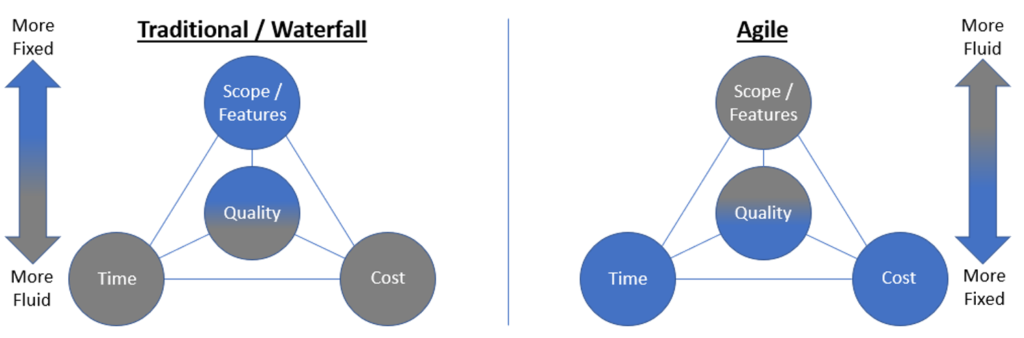
Traditional / waterfall projects tend to spend more time defining scope and features early and therefore are less likely to be fluid on scope. Agile projects on the other hand are more likely to have fixed time and cost and be open to the scope evolving based on business needs. You are therefore likely to find time and cost overruns on traditional projects and a reduction in scope in Agile projects.
While the above are generalisations, an experienced project professional will tell you these are often borne out in projects.
Key things to look out for are talk about ‘post go-live’ registers or ‘initial go-live’. This tends to be a sign that the scope is not on track to be delivered.
Project Artefacts
Project Artefacts like the risk and issue registers, project charter and change request log can be great sources of evidence of whether a project is in trouble.
Projects don’t operate without risk. A blank risk register – or one where the register has remained stagnant for long periods – is a sure sign that the project is not being managed effectively and possibly in trouble. Conversely another trap is to populate risk registers with generic risks – i.e. risks that can apply to any/all projects – which are difficult to mitigate and can result in a perpetually ‘amber’ project.
On the other hand, a project Issues Register should not be continually populated with open issues. The Issues Register shouldn’t be used as a ‘to do list’ – it should only be populated when there is a certain impediment that means project budget, timeframe, scope or quality will not be achieved. It’s rare for a project to sail from start to finish without a single issue being raised. Ensure that when issues are raised, they are being raised to an appropriate level for decision-making and information.
Project Team
Metrics, plans and registers are one way to judge a project’s health, but nothing beats talking to those at the coalface. Sponsors need to have full trust in their Project Managers but that doesn’t mean they should be the sole source of information about the project. Having a sponsor involved and showing genuine interest does wonders to motivate a project team and it also allows concerns to be picked up that are perhaps not being raised up in status reporting.
Summary
The top 5 tips for drilling into a project or program that may be in trouble are:
- Obtain a history of RAG status reporting. If the project has been ‘amber’ for long stretches of time, find out why.
- Review Issue, Risk and Project Change Request registers. If there are no risks, this is a red flag. If there have been changes to scope, budget or schedule without corresponding issues and change requests, this is also a red flag.
- Poll project team members and stakeholders as to what features they expect to see on go-live (or at each go-live) and compare for inconsistencies. If there are any, this is a sure sign the project is in trouble.
- Find the initial project plan presented when the project was approved and compare to the current project plan. If you see a large number of changes – particularly if later phases (e.g. testing) have been compacted to allow more time for earlier phases – then this can be a sign the project is in trouble.
- Talk to the project team members individually or in small groups to gauge the mood, pick up on unregistered issues or risks, see how close they are to the project plan and determine how much effort is truly being expended to meet scope and timeframes.
There are many other reasons why projects may be in trouble that may not necessarily surface through the above steps. These may be issues with personnel, vendors, tools or governance.
Whether through an internal project assurance function or via external review, if you have any doubts about the viability of your projects, regular health checks or project reviews are an excellent way to address concerns and enable better decision making.


