

Starting the delivery phase of a project is exciting. The vision has been agreed, you’ve written the business case and had funding approval, the project team is starting to assemble. This is a where the anticipation of what can be delivered is at its peak. It’s also where it makes sense to take a breath and make sure you start your project correctly.
A lot of time during a project is spent checking on progress. Think of all the project status reports that are written, the working groups and steering committees attended, the retrospectives conducted. We also spend a lot of time at the end of a project looking back through post-implementation-reviews (PIRs) and documenting our lessons learned. It’s all great and valid, but how much time do you spend at the start setting the right foundations on the project? The right expectations and approach?
Our recommendation is to have a formal project kick-off meeting with the following items on the agenda:
1. Introductions – often at the start of this phase there may be people coming together who weren’t involved or didn’t meet during preparation of the business case. Ensure there is a ‘one team’ mentality created within the room and everyone is comfortable with their roles.
2. Vision – the Project Sponsor should set their vision of what the project will change within the business when delivered. The Sponsor should be inspiring, let people know the importance of the project and be ready to take ownership of the project outcomes.
3. Business Drivers – ensure you take the time to understand the business drivers, that is, what is important to the business as the project is kicked off. It can be useful to use a simple tool to achieve this, such as the diagram below. You start with 20 ‘tokens’, make sure to use them wisely as applying 5 to each category tells you nothing. A good facilitator can help here.
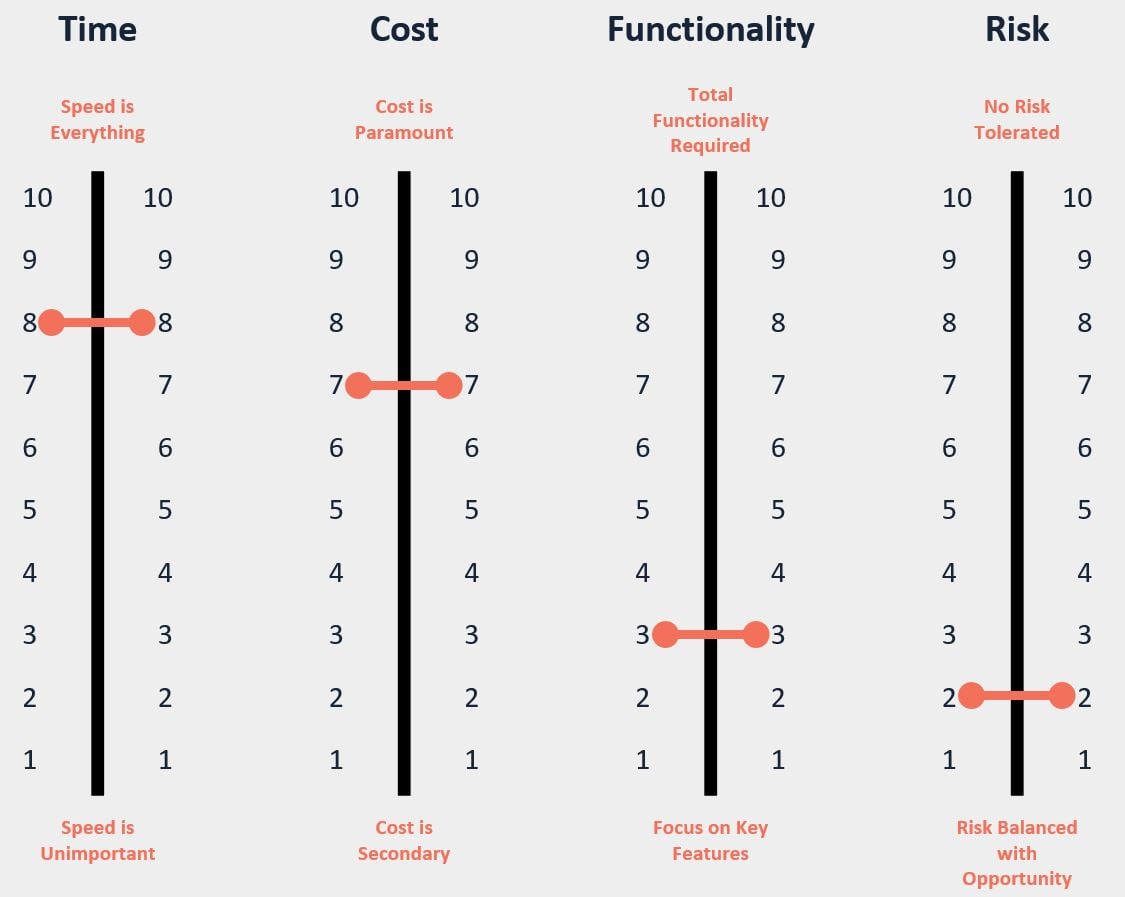
In this diagram, the project leadership team’s top priority is something delivered quickly and economically with a small feature set. They are also happy to balance risk with opportunity.
This type of tool helps shape the project team’s decision making through the life of the project as they know what the priorities are for the business. It is worth noting that on a long project you may revisit these drivers several times as the needs of the business change.
4. Project Overview – lay out the key elements of the project such as expected outcome, team structure including roles and responsibilities, delivery methodology, technology to be used, and project schedule including key milestones.
5. Lessons Learned – the purpose of the lessons learned routine at the end of a project is to inform the next project. If you review previous outcomes you may find out what constraints your project is likely to face, for example your organisation has a history of under-funding change management, or the Project Sponsors often get pulled into business-as-usual activities to the detriment of the project. Once you are aware of these previous issues you can plan your project to address them.
6. CARDI Log – it’s called many things, CARDI, RAID, Risk & Issues log. Whatever it’s called in your organisation, now is a good time to get the team together and lay out what you think might happen so you can prepare. Looking at all the possible Constraints, Assumptions, Risks, Dependencies and Issues can help ensure you are prepared when they arise. This part of the project kick-off is sometimes called a ‘pre-mortem’, it is your opportunity to imagine things going wrong before they do, therefore giving you a chance with a clear head to formulate an approach if they do happen.
7. Bring Energy – projects are tough, but they are exciting and it’s the responsibility of the project leadership to create and maintain that energy on a project. Get everybody involved in the kick-off so they know what is expected of them as well as the project.
There is a saying around projects that if you fail to plan, you plan to fail. It’s true, planning is important, and having a structured kick-off meeting to get everyone on the same page is a vital step in that planning process. That being said, you will often revisit a lot of the points above throughout the life of the project as you ensure that you do not only start as you mean to go on, but you also carry on that way.


